Mean Time Between Failures — MTBF — is one of the most quoted numbers in maintenance and one of the least measured. Everyone agrees it matters. Few teams can produce it for a single machine, because it needs two numbers most sites never record properly: how many hours the machine ran, and how many times it truly failed.
This article explains what MTBF means, why it is usually wrong, and how Prosas calculates it from the work your team already does.
What MTBF Actually Measures
The formula is simple:
MTBF = operating hours ÷ number of failures
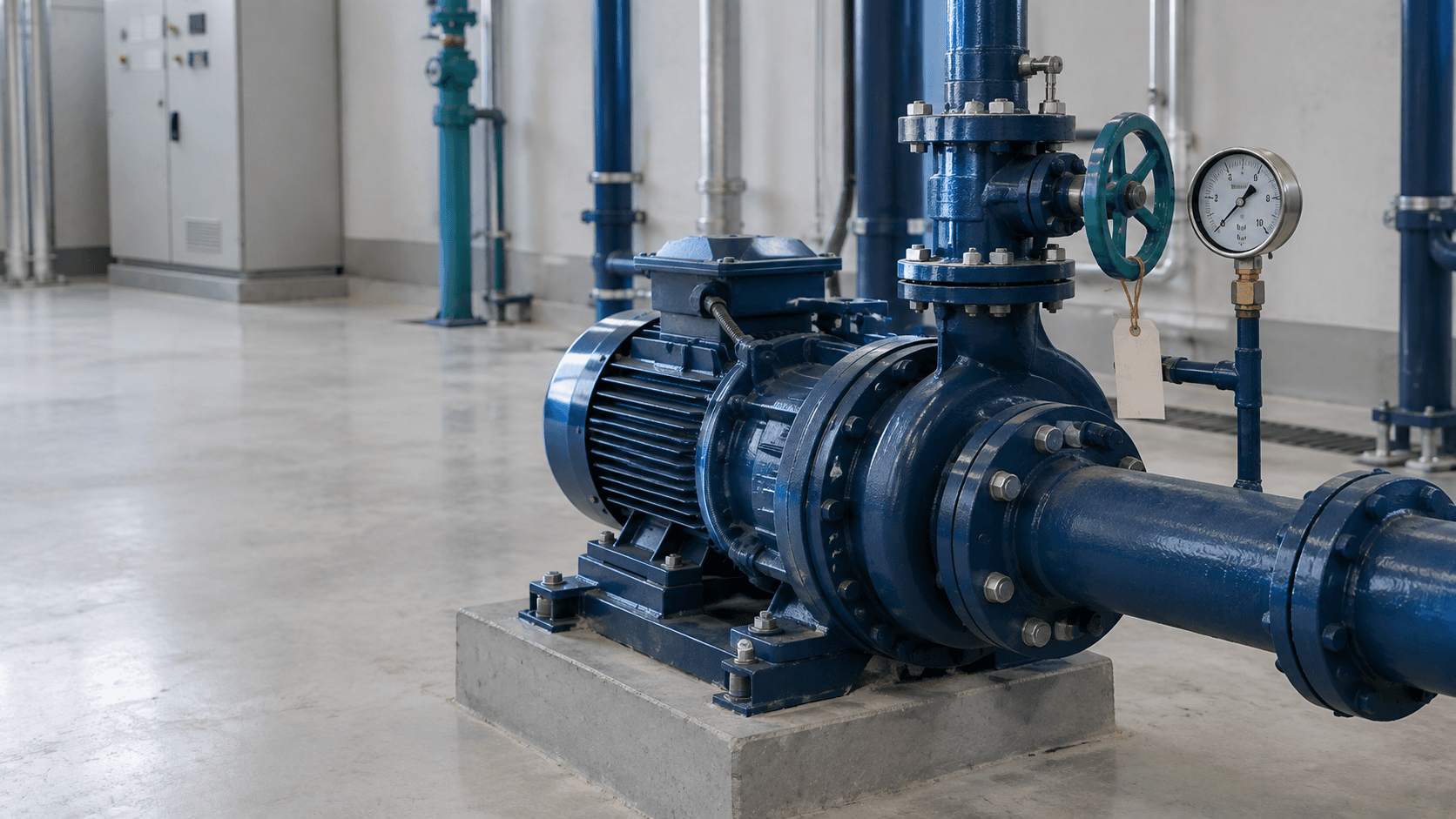
A pump that ran 2,070 hours and failed three times has an MTBF of 690 hours: on average, it runs 690 hours before it breaks. The higher the number, the more reliable the machine.
The trouble is in the two inputs.
Why Most MTBF Figures Are Wrong
- No hour meter — most machines do not count their own running hours, so the hours are guessed
- Calendar time instead of running time — a generator that runs two hours a day is treated as if it runs twenty-four
- Downtime counted as running time — days the machine was broken are added to its hours
- Every issue counted as a failure — an early warning caught in time counts the same as a breakdown
Each of these errors pushes the number in a different direction, and the result is a figure nobody trusts.
How Prosas Gets the Operating Hours
A Routine for Each Machine
Instead of an hour meter, each machine carries a routine: how many hours it runs on a normal working day, and which days of the week it works. A chiller might run 24 hours a day, every day. A standby generator might run 2 hours a day, Sunday to Thursday.
Hours Booked Automatically
Prosas books the operating hours for every completed day from that routine. Days the machine does not work add nothing. If someone logs a real reading for a day, the real reading wins and the estimate is skipped — the two are never added together.
Downtime Is Subtracted Fairly
When a machine is out of service, its lost hours are removed in proportion to how much it would have run. A pump that runs 24 hours a day and was down for 15 hours books 9 hours. A generator that runs 2 hours a day and was down for the same 15 hours books 0.75 hours — not a negative number.
How Prosas Counts the Failures
Breakdown and Restart Times
A work order can record when the machine stopped and when it went back into service. This matters because repair time and downtime are different things. A pump can sit dead for 30 hours waiting for a part while the repair itself takes 2. Reporting 2 hours as the outage hides most of the cost.
Real Failures vs. Early Warnings
Each failure is marked as either functional — the machine actually stopped — or potential — an early sign such as vibration, heat or noise that was caught before it stopped. MTBF is calculated on functional failures by default. Otherwise, a team that catches problems early would see its MTBF drop every time it did its job well.
| Counting basis | Failures | MTBF |
|---|---|---|
| Functional only | 3 | 690 hours |
| Potential only | 3 | 690 hours |
| All together | 6 | 345 hours |
Same machine, same period, very different stories. That is why the basis is always shown next to the number.
Target vs. Achieved
Each machine can have an MTBF target. Prosas compares the achieved figure with it and shows the result as a percentage. A pump with a target of 1,500 hours and an achieved MTBF of 690 hours is at 46% — clearly a machine that needs attention.
A machine that has never failed shows exactly that: no failures yet. It is not shown as zero, and not as infinity.
Equipment status follows the work, too. When a work order starts, the machine is marked as under maintenance. When the last open order on it is completed, it returns to active on its own.
How to Start
- Pick your ten most critical machines — not the whole asset list.
- Fill in each one’s routine: hours per day and working days.
- Set an MTBF target from the manufacturer’s data or your own experience.
- Record breakdown and restart times on every corrective work order.
- Mark each failure as functional or potential.
After one quarter, you will have an MTBF you can defend.
Frequently Asked Questions
Do I need hour meters on my equipment?
No. The routine gives a reliable estimate, and any real readings you log take priority over it.
What about the time before I set the routine?
When a routine is first set, Prosas books at most the last 90 days — enough to start, without inventing years of hours.
Is downtime the same as repair time?
No. Downtime is how long the machine was out of service. Repair time is how long the technician worked. Prosas shows them separately.
Should early warnings count as failures?
Not in your main MTBF. Track them separately to show how well your team catches problems before they become breakdowns.
A Number You Can Trust
MTBF is only useful when both of its inputs are honest. With Prosas, operating hours come from each machine’s real routine, downtime is subtracted fairly, and failures are counted the way they happened — so the reliability figure on the screen is one you can take into a budget meeting.